Fast Fashion - A Horror Story
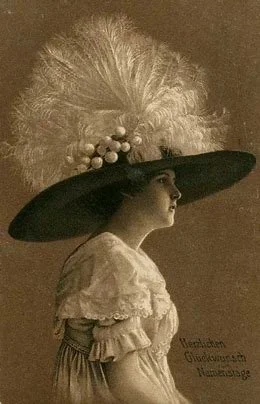


Victorian & Edwardian feathered bird hats.
By Sarah Keen.
The trouble is with history is that we think it’s all over. Lessons have been learnt, everyone is more educated, sophisticated, better than those who have gone before.
We, for example, would rather go naked than wear fur. Killing an entire species of native birds to wear on our hats? Nope, not for us. We can stand by our not guilty pleas in the court of the Blue Planet.
Before the lockdown, I was fortunate enough to work with young women (max age 27) in an admin support centre for the NHS. These beautiful girls worked as PAs to teams of consultants and senior managers. They are dedicated, smart and funny.
Each morning was treat of new fashions, shoes and handbags. Monday mornings were spent recounting an entire Saturday at a hairdresser having extensions put in. Their glossy locks hung down the length of their backs or were swept up into elegant chignons. Occasionally I would pick up tiny plaits from the floor to squeals ‘they need re-doing – the glue’s gone’ I asked where the hair came from and how much it cost. I was met with pitying looks reserved for the fifty-year-old spinster in their midst. Real human hair, they explained slowly as to an idiot, usually comes from India. It was bleached, dyed and then woven in amongst their own. Cost up to £500 but they usually had a mate who could do it a bit cheaper. Synthetic hair was all right but it keeps falling out. Either way, it needed redoing every few weeks[1].
The girls would then return to their work, analytical, conscientious, desperately trying to keep up with the screeching U turns of senior managers, the shortage of meeting rooms, unhappy patients. Their stress levels were extremely high and self-confidence correspondingly low.
They were on the minimum wage and all lived at home with their parents. Occasionally their team leader would run career reviews. Where do you want to be in two years’ time? How do you see yourself progressing?
They would say all the right things but back in the office the truth was obvious. They wanted to be married. They wanted babies. They did not plan to work after that – unless it was to support a husband in his business. One young 18-year-old particularly wanted to settle down with her 19-year-old boyfriend. The women were dressing so beautifully to one end; to be attractive enough to be singled out for marriage and parenthood. One had managed to find a partner six years older than herself. He earns £30K she enthused and made it clear she would do anything to keep him. Anything! To emphasis this she rapped her immaculate gel nails (don’t ask) on the desk.
Her mother was her role model and had been a home town beauty queen in the 70s. My colleague would show us endless photographs of this event with a touching pride. Her father told her who to vote for and she followed his advice without question.
How do you meet people? I once asked. Did they join classes, do something they enjoyed? Again, pitying looks. We go OUT, OUT. Going out out, it transpired, was getting dressed up to the nines, applying even more immaculate make up and buying new clothes and shoes. The new clothes cost around £10 and would be delivered within 12 hours. Boohoo and Misguided were the go to supplier[2]. They could supply the latest fashions for a startling low rate and swift delivery.
They would then go clubbing with the sole purpose of dating. They were not interested in anything other than a serious relationship and their harshest judgement was reserved for girls who did not. They were rivals without standards.
How many clothes do you buy in a month? I asked once and then wished I hadn’t. Going out Friday and Saturday nights required a complete new outfit. So conceivably 8 items a month are purchased, worn once and never used again. This is approx. 24 items in one office alone – 288 over a year. Again, it was explained slowly to me by the eighteen-year-old. If you wore an item more than once it would be spotted instantly. It was a fashion faux-pas from which there was no return. ‘It’s called a DRESS REPEAT.’ My young friend shuddered at the thought. I just throw out the old clothes or the ones I don’t like on opening. Not worth sending them back.
Economically this argument makes sense[3]
Would they ever consider vintage/second hand?
DISGUSTING! Oh my days…
History tells us that customers were eventually persuaded that a dead-bird-hat was not a great look. We urgently need to make a similar argument about fast fashion[4] that resonates with these beautiful but insecure young consumers.
They deserve more, we deserve more, the planet deserves nothing less.
13-10-2022
[1] The hair trade's dirty secret | Women | The Guardian
[2] Fast fashion: Boohoo and Missguided among worst offenders in sustainability inquiry | The Independent | The Independent
[3] Shocking report reveals cheap clothes often can't be resold - and end up rotting in Africa | Daily Mail Online